
How the Santa Clarita Residents Directory Works
A Santa Clarita residents directory works as a sequence, not one master list. One fact unlocks the next. An address can lead to an AIN, the county's parcel key. The parcel then leads to a legal description and a known deed party. A court index can confirm a case role. A vital record can confirm a family event. This applies when the requester qualifies for the right copy. A historical directory can place a household in Newhall, Saugus, Valencia, or Canyon Country. That reaches back before the city existed.
Start with the narrowest fact. An address beats a loose name. A document or license number beats a name alone. The official trail can show ownership, registration status, a permit participant, a recorded party, or a directory subscriber. It does not make every occupant, child, or household member a public entry. Write down the search date and the exact spelling used each time. Those details keep the trail honest.
- Search the Los Angeles County Assessor Portal by a known address or ten-digit AIN, then save the parcel and legal-description details.
- Open the county or city parcel map to inspect the site, neighboring polygons, jurisdiction, and prior parcel clues.
- Use the recorder's name-and-year grantor/grantee index when a deed party or recording year is known.
- Use the personal voter-status tool only for the person and address information it asks you to verify; it is not a public street browse.
- For an older household, search the library, SCVHistory, yearbooks, newspapers, and discrete telephone volumes under the community name used at the time.
Where Santa Clarita Records Live
Santa Clarita sits inside Los Angeles County. It is not a records county of its own. City Hall handles council files, city administration, permits, planning, and code activity. Deeds take a county trip. The Los Angeles County Registrar-Recorder/County Clerk keeps deeds, local vital copies, marriage records, and the grantor/grantee index. The county assessor, elections office, and Superior Court answer other resident questions, while California departments add statewide vital, license, business, custody, privacy, and archive channels.
Los Angeles County RR/CC
Real-estate, vital, and marriage records
Norwalk service channels
(800) 201-8999
Los Angeles County Assessor
Parcel facts, AIN, legal description
Address and AIN search
Public portal access
Santa Clarita City Clerk
City records and public requests
23920 Valencia Boulevard
(661) 259-2489
Two doors stay closed online. The recorder's index is not a public owner-name database on the web, and the assessor's portal offers no general owner-name browse. That keeps office service in play. A precise written request and the library's historical shelf round out the normal Santa Clarita records path.
Santa Clarita's Three Records Levels
Santa Clarita incorporated on December 15, 1987, and municipal, county, and state custody now overlap in place but not in function. The city inherited administrative work. County and state series kept their own custody. That matters when a search uses the name Santa Clarita for a record created under Newhall or Los Angeles County. Labels age faster than files.
The city layer uses three tools. The Clerk, Laserfiche, and Accela supply administrative names, project addresses, and permit participants. The county level works through the Assessor, RR/CC, Superior Court, and the elections office, which supply parcel, deed, case, and voter channels. State departments add vital, entity, license, custody, privacy, and archive records, but none turns an owner, deed party, case party, or permit participant into an automatic occupant.
Postal geography adds a layer. Newhall, Saugus, Valencia, and Canyon Country still matter. Older directories, newspapers, and maps used them long before the city name became an umbrella label.
Santa Clarita Parcel Search by AIN
The Los Angeles County Assessor Portal is the best first stop when an address or Assessor Identification Number is known. Choose Search by AIN or Address. Or use Search by Assessment Legal Description. Each mode uses one required text field. Broad queries may stop at 501 results, so an exact street number, street name, or ten-digit AIN saves time.
| Field or control | Type | Required | What it does |
|---|---|---|---|
| Search by AIN or Address | Tab and text | Yes | Finds a parcel from an exact address or ten-digit AIN |
| Search by Assessment Legal Description | Tab and text | Yes | Uses the legal description when street wording changed |
| Search | Button or icon | Required action | Returns matching parcel records, subject to the result cap |
A sample City Hall parcel record shows what one lookup can carry forward. The detail covers plenty. It lists an AIN, coordinates, situs and ZIP, use code, units, built and effective years, building and lot area, values, zoning, legal description, assessment flags, and tract lots. Owner identity is absent. The mailing address is missing too. Treat the AIN as a bridge, not the page as proof of who lives there.
- Roll
- A custodian's organized record series, such as an assessment roll; it is not automatically a resident list.
- Parcel
- A defined land unit tracked across assessment and map systems by an AIN or APN, legal description, and site facts.
- AIN
- A county parcel identifier that stays useful when a street label or ZIP changes.
- Situs address
- The physical location assessed by the county, distinct from a tax-mailing destination.
- Legal description
- The land's recorded description, which can outlast a renamed street.
- Index
- A finding aid that points to a record; it is not always the record image itself.
- Criss-cross directory
- A historical reverse directory arranged by address or street, connecting a site to a subscriber, resident, or business lead for one year.
The Los Angeles County Assessor Portal is the address-to-parcel starting point.
Note: An assessor result can anchor a parcel search, but it does not certify present occupancy or provide a public owner-name browse.
Current Santa Clarita Resident Sources
Current directory-style sources each answer a different question. The assessor describes a parcel, and the recorder indexes parties to instruments. The voter tool validates a personal registration status. City files show people tied to public work, while a chamber or association adds an organizational contact layer rather than a household roll.
| Source | What it may show | Custodian | Access posture |
|---|---|---|---|
| Assessor parcel detail | AIN, situs, legal and assessment facts | Los Angeles County Assessor | Free address/AIN search |
| Recorded index | Grantor, grantee, liens, instrument trail | LA County RR/CC | Counter or written order |
| Voter status | A person's registration information | Los Angeles County or California SOS | Identity fields required |
| Permit record | Work, dates, applicants, contractors | Santa Clarita Accela | Limited anonymous view, account, or counter |
| Community directory | Organization contacts and public activities | Chamber or association | Roster is not a public household list |
A one-person goal changes the route. Use the resident lookup path. Keep separate columns for name, role, date, parcel, case, and source, because a matching name alone is not enough to merge two records.
Santa Clarita Courts, Vitals, and Voters
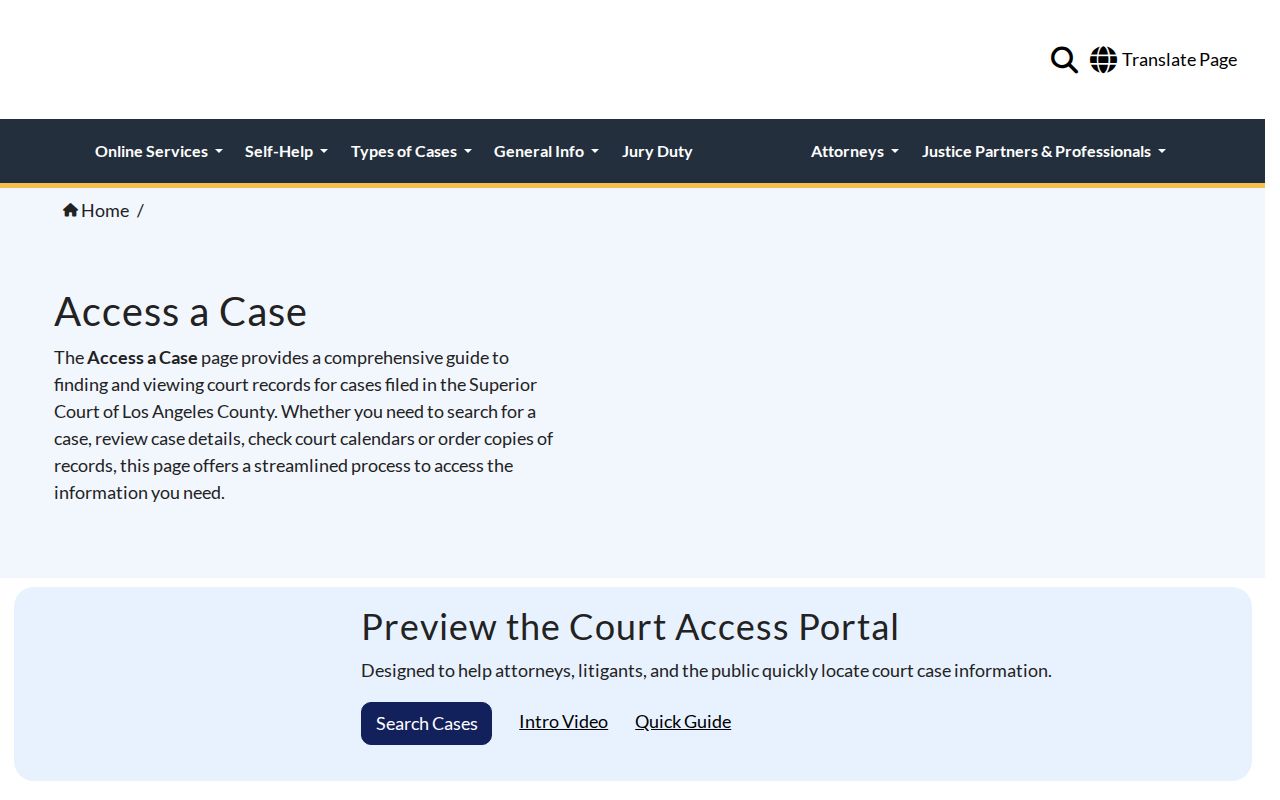
Each court source opens differently. Los Angeles Superior Court sells access to a civil, probate, and family name index. Criminal coverage plus remote images carry their own restrictions. The Santa Clarita Courthouse handles criminal and traffic divisions. Other case types may route to San Fernando, Sylmar, or Stanley Mosk. Treat a court summary as a lead. The official file lives elsewhere.
Vital records form no single open list. LA County issues local copies of birth, death, marriage, and divorce records. The California Department of Public Health runs the statewide channels. Authorized and informational copies are distinct. Family Code section 511 keeps confidential marriage certificates with the parties. Only a court order changes that. Expect a relationship showing, sworn statement, notarization, and fee on many applications.
The Los Angeles County voter-status lookup needs a last name, birthdate, house number, and ZIP Code. It checks one voter's own registration. It cannot walk a Santa Clarita street or list a block. Elections Code section 2194 governs voter files. Confidential participants, including Safe at Home users, stay suppressed.
The Los Angeles Superior Court case-access entry point separates case-number, party-name, calendar, and courthouse paths.
Santa Clarita Permit Records by Address
A resident question is often a project question in disguise. The Santa Clarita Permit Center is where those threads come together. The Accela eService portal splits into Property Information, Building, Licenses, and Environmental Services. Filters include record or application number. You can also search by street number and name, parcel number, and a date range. A result can show record type, status, and address. It also lists application and issue dates, description, inspections, and applicant or contractor contacts.
Counter hours run Monday through Thursday, 7:30 a.m. to 5:00 p.m. Friday hours are 8:00 a.m. to 5:00 p.m. Building and Safety, Planning, Engineering Services, and Environmental Services each list separate phone contacts. Anonymous viewing is limited. Registration is required for all services. Code-enforcement and Resident Service Center files can hold private complainant data. So a targeted address-keyed log beats any push for private names.
Permit names prove work, not residence. A contractor, service agent, applicant, or owner may appear. Yet any of them may have no household tie to the address at all.
Santa Clarita Rolls and Compiled Leads
Commercial people-finding services bundle public and commercial feeds for speed. They can merge stale addresses or tangle namesakes, and they never replace the custodian's record. An official index may be slower and office-only. Yet its fields, dates, roles, and access rules can always be checked at the source. That check is worth the wait.
| Question | Official record trail | Compiled lead |
|---|---|---|
| Where did the clue come from? | Named custodian, field, date, and record type | Mixed feeds with unclear freshness |
| What does an address mean? | Situs, legal, mailing, or recorded role can be separated | Labels may be merged or stale |
| How is it checked? | Repeat the search and request a certified or official copy when eligible | Return to the underlying custodian |
Use the narrowest official source first. A stable AIN, court case number, license number, or recording instrument is stronger than a matching first and last name.
Santa Clarita Business and License Records
A person can be tied to a Santa Clarita business. The filing trail may be public, but no residence record comes attached. The California Secretary of State's bizfile searches entities by name or file number. Filters cover entity group, status, and initial filing date. Recent Statements of Information and other filing-history PDFs are often free. Remember the rule. An agent for service, principal address, or mailing address belongs to the filing as submitted. It does not automatically point to a home.
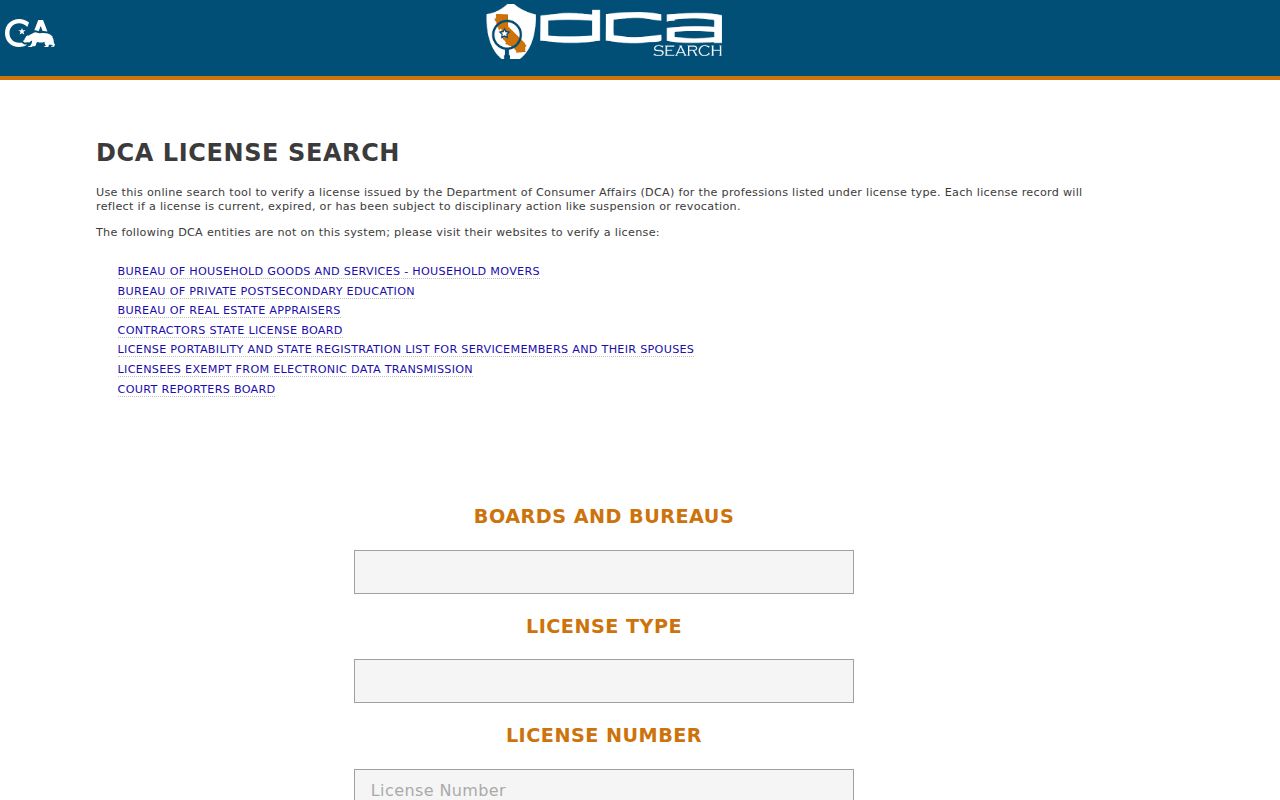
The California Department of Consumer Affairs search narrows by board or bureau. It also filters by license type, license number, business name, first and last name, registry number, city, county, status, and public discipline. State Bar, contractor, real-estate, and teacher systems each carry their own fields. Anchor on the license or entity number first. Then compare dates and filings across what turns up.
The California license search is a separate statewide identity and credential channel.
For an entity trail, the California business search opens the latest filing and then older Statements of Information. Local fictitious-business-name filings and city permit records add context. None of it proves a current residence without an independent address and role match.
The Secretary of State bizfile search provides the entity-number and filing-history path.
Santa Clarita Resident Clues in Unclaimed Property
California's unclaimed-property search works as a free name and geography check, not a current resident directory. The Controller's claim search takes a last or business name unless you use a Property ID, with optional first name, city, and ZIP Code. Results may surface a reporting address or city clue. Claiming still demands identity documentation. The state sets no deadline.
The fields are simple. Last or Business Name is required unless a Property ID substitutes. First Name, City, and ZIP Code stay optional. Property ID offers an alternative path, and Search runs the query. Exact matches rank first, similar names follow, and selected results can be added to a claim.
The California unclaimed-property search demonstrates a name, city, and ZIP path.
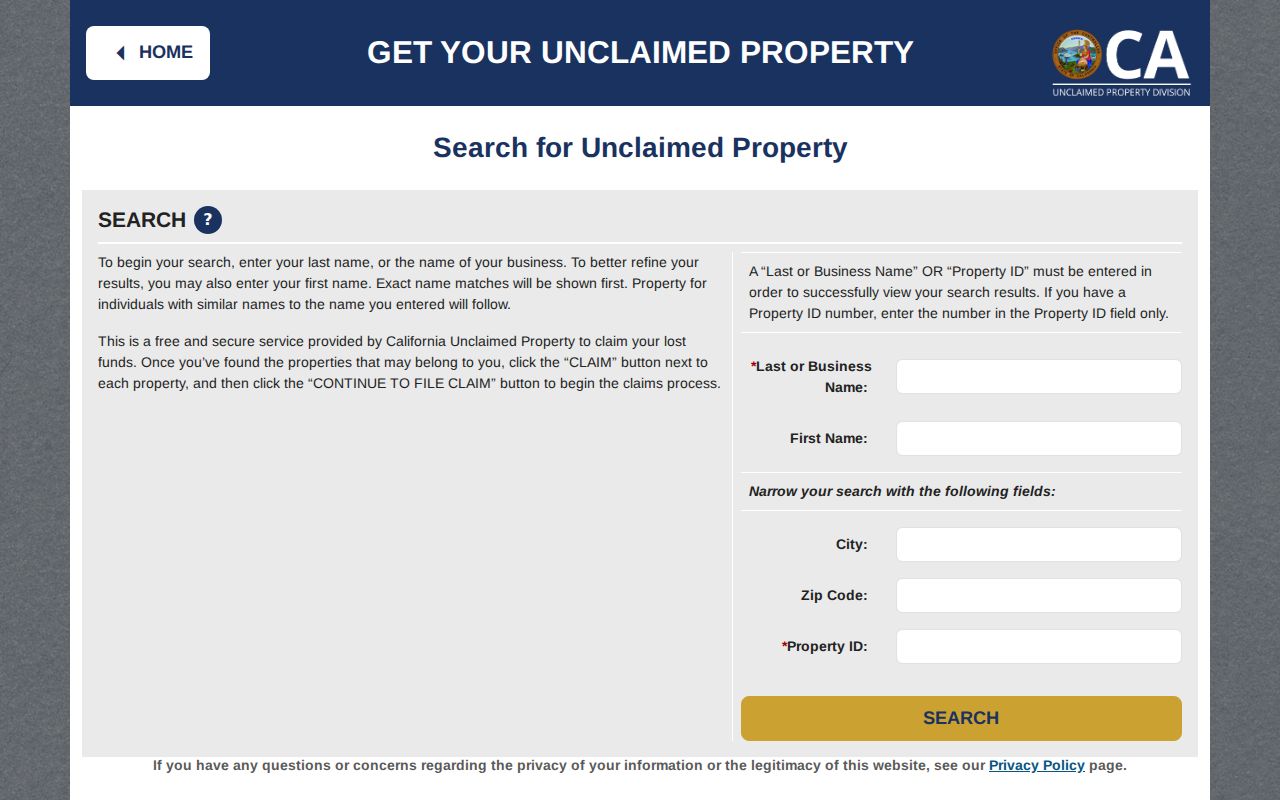
Note: A reporting address in an unclaimed-property result is historical evidence, not proof that a person lives there now.
Santa Clarita Directory Names Across Time
Older records may never say Santa Clarita. Search Newhall, Saugus, Valencia, Canyon Country, and Los Angeles County as separate terms. The 1969 local city directory deliberately covered Newhall, Saugus, Valencia, and Canyon Country before incorporation. The Signal archive likewise spans the older communities. A ZIP label is a mailing clue, not a city-line test.
When a record fights modern mapping, keep both forms. Save the historical street wording and the current address. Old Town equivalences include Spruce to San Fernando Road to Main Street. Tenth Street or Pico Road became Lyons Avenue. Fir turned into Walnut, and Maple into Chestnut. Legal descriptions and parcel numbers bridge eras more safely. They beat forcing an old address into a present search box.
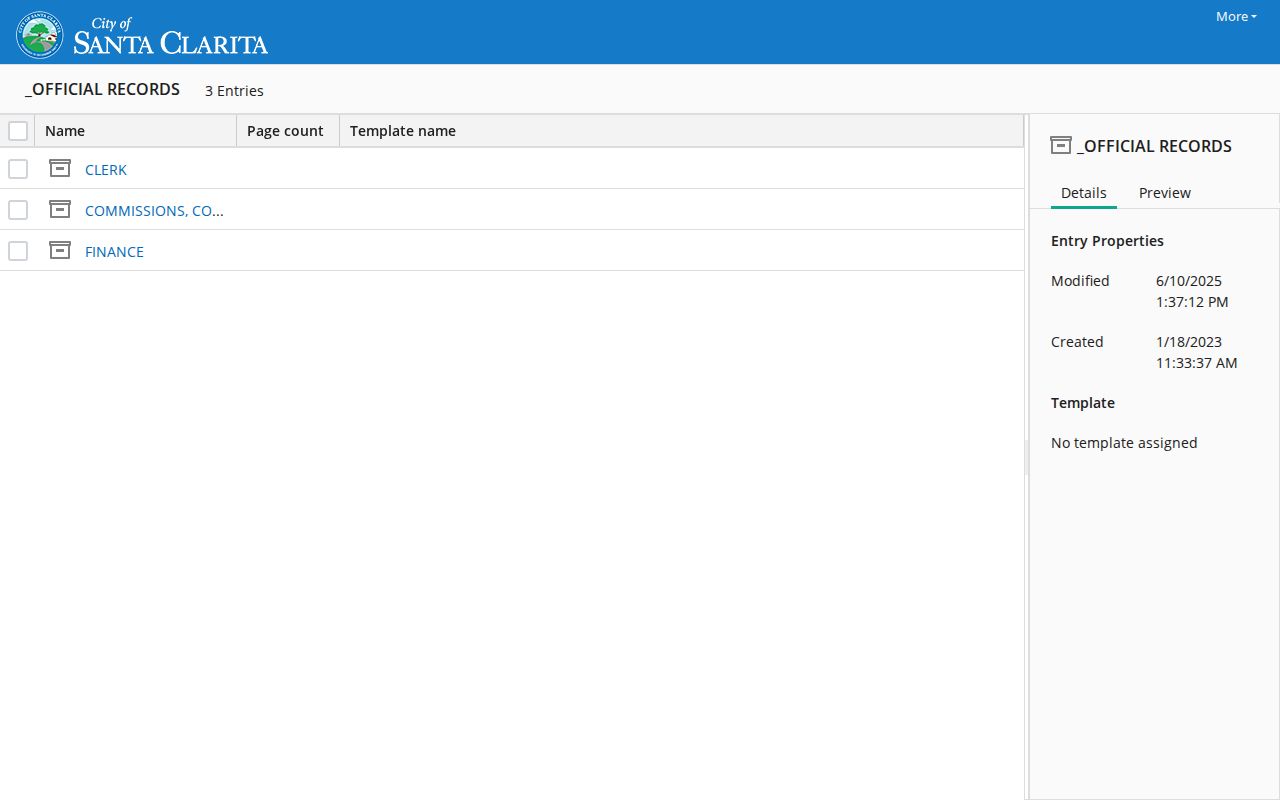
The Santa Clarita public document repository gives a city-level example of searchable administrative records.
Santa Clarita Records Beyond the Web
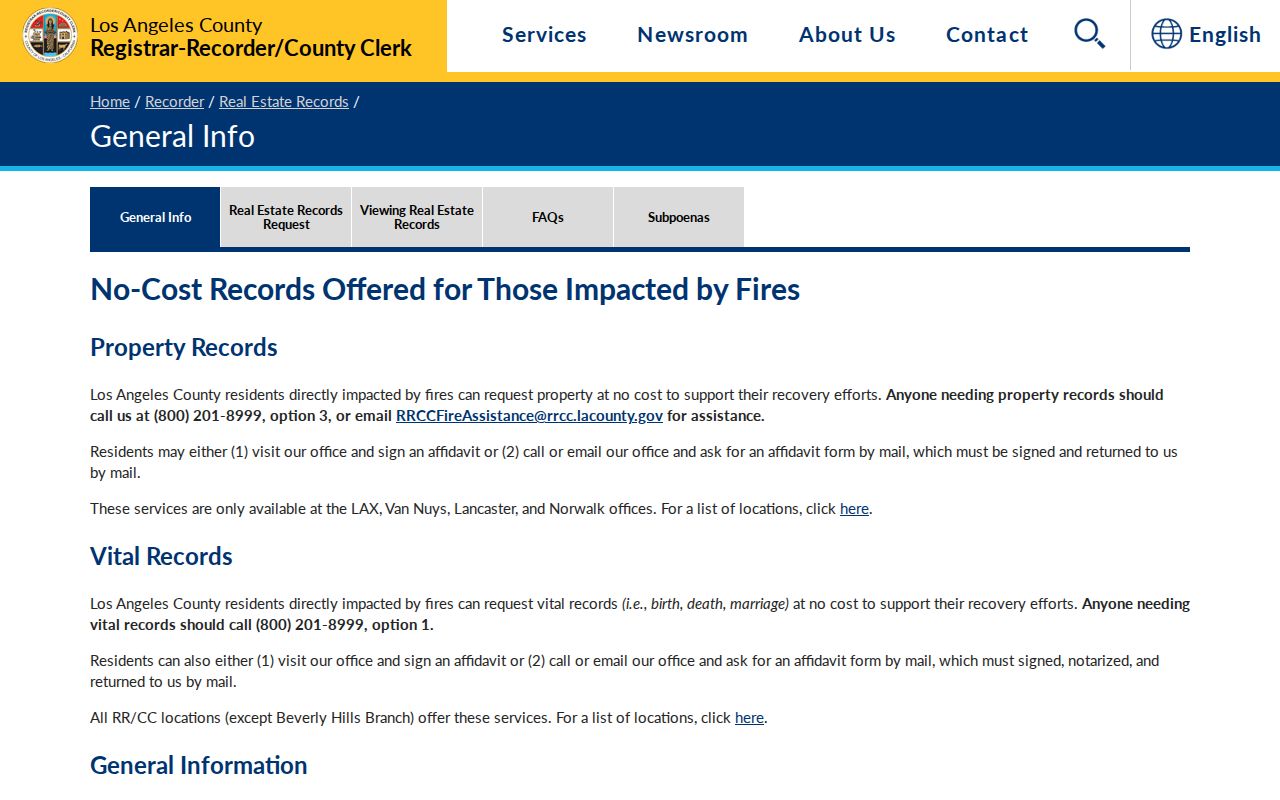
Los Angeles County shows the gap plainly. The RR/CC office publishes no complete online deed index and no online images. At Norwalk, though, the indexes are free to view by appointment. Alphabetical name-and-year volumes sit on two floors. Volumes from 1851 through 1957 are on the lower level. Volumes from 1958 to the present are on the second. Mail requests work too. Give the document title, the names involved, and the recording year. Ordering a copy is not the same as running a street search through a city directory or residents directory.
When a Santa Clarita record is missing, try Laserfiche and the council packets first. A CPRA request can follow. Start with a date range and the department. Then name a project or address. List the specific file, log, export, or correspondence set you want. Government Code section 7922.535 gives the agency ten calendar days to decide whether disclosable records exist. A written extension of up to fourteen days is allowed for unusual circumstances. That clock covers the determination only. Production can take longer.
For older names, the Santa Clarita Public Library is the fallback. A reference worker can check local-history and vertical files. The same worker can pull non-circulating materials, FamilySearch, HeritageQuest, and the newspaper archive. These collections supplement county records. They do not replace a certified record from the county assessor or recorder.
Historical Santa Clarita Residents Directory Trails
Printed volumes for the valley are few but worth hunting down. A Newhall book dates to March 1923. A combined Santa Clarita, Palmdale, and Lancaster directory appeared in 1929. Pacific Telephone issued books in January 1957 and January 1958, and the 1969 Newhall-Saugus-Valencia-Canyon Country Local City Directory rounded out the era. That 1969 city directory lists each resident with a surname, first name, occupation or title, numbered street, a one-letter community code, and a phone. It follows a local convention, so spouse listings and owner-renter marks should not be assumed.
Work the trail methodically. Search a surname or business first, then transcribe the community code and address, inspect nearby alphabetic entries, and compare against a neighboring volume, The Signal, and the 1950 census. Deeds and permits can push the trail past 1950. The collection-by-collection detail sits in the Santa Clarita directory book, while modern parcel work belongs in the Santa Clarita street directory.
The Los Angeles County recorder entry point explains the counter and order route behind the historical deed trail.
Santa Clarita Heir Trails and Privacy Limits
An heir trail can be rebuilt through probate, deeds, and obituaries. You do not need to pry open a sealed record. Begin with a probate case index filed under the decedent. From there, inspect public petitions, notices, recorded affidavits, or trustee deeds where access is allowed. A birth-parent or adoption question runs through California's confidential adoption process. It is not a shortcut through a residents directory. Yearbooks help classmates reconnect. Current student records stay protected, and no resident lookup changes that.
California Safe at Home gives eligible survivors a substitute mailing address with forwarding. Other protected participants get the same. It cannot scrub data already public. A protected residence should never be pieced back together from fragments. A broker deletion request touches only the broker's copy. It never touches a deed, court file, or government record held by a records office.
Ethical stop line. Public records are for personal, lawful research. Do not use an address clue to stalk, harass, threaten, impersonate, or harm another person. If a source signals confidentiality, stop and use the custodian's approved process.